
From Rules to Raw Power
Why legitimacy is what powers the Secretary-General’s office.
When Justification Breaks Down
The danger facing the UN is not that rules are being broken – they always have been. The deeper danger is that powerful actors increasingly feel they no longer need to justify why they are breaking the rules.
That shift carries real implications. The postwar system forced states to speak in the language of law, peace, rights, sovereignty, and collective responsibility. Those words created a so-called “grammar of rights and norms”, giving smaller states, civil society, journalists, courts, movements, and the UN itself something to use. That is why legitimacy must be treated as a central issue – and a practical form of power – in the next Secretary-General selection.
Early, indicative survey insights show that young people are clear on this. In open-text responses, trust in the Secretary-General is repeatedly tied to integrity, human rights, international law, protection of civilians, transparency, and courage under pressure. When asked which leadership style they trust most, under-35 respondents prefer active leadership.
Eighty-six percent choose adaptive and decisive leadership, while 16% percent choose careful and consensus-driven leadership.
When concern becomes cover
Dialogue 2 captured the same demand. Aya Chebbi, Founder and President of Nala Feminist Collective, argued that the next Secretary-General must do what "no Secretary-General has been willing to do so far, which is to name complicity."
Her warning was clear: when crises are merely managed, not resolved, they run the risk of becoming permanent. "The famine becomes stabilized. The conflict becomes contained." In her words, the institution has learned to "administer suffering. Not to end suffering."
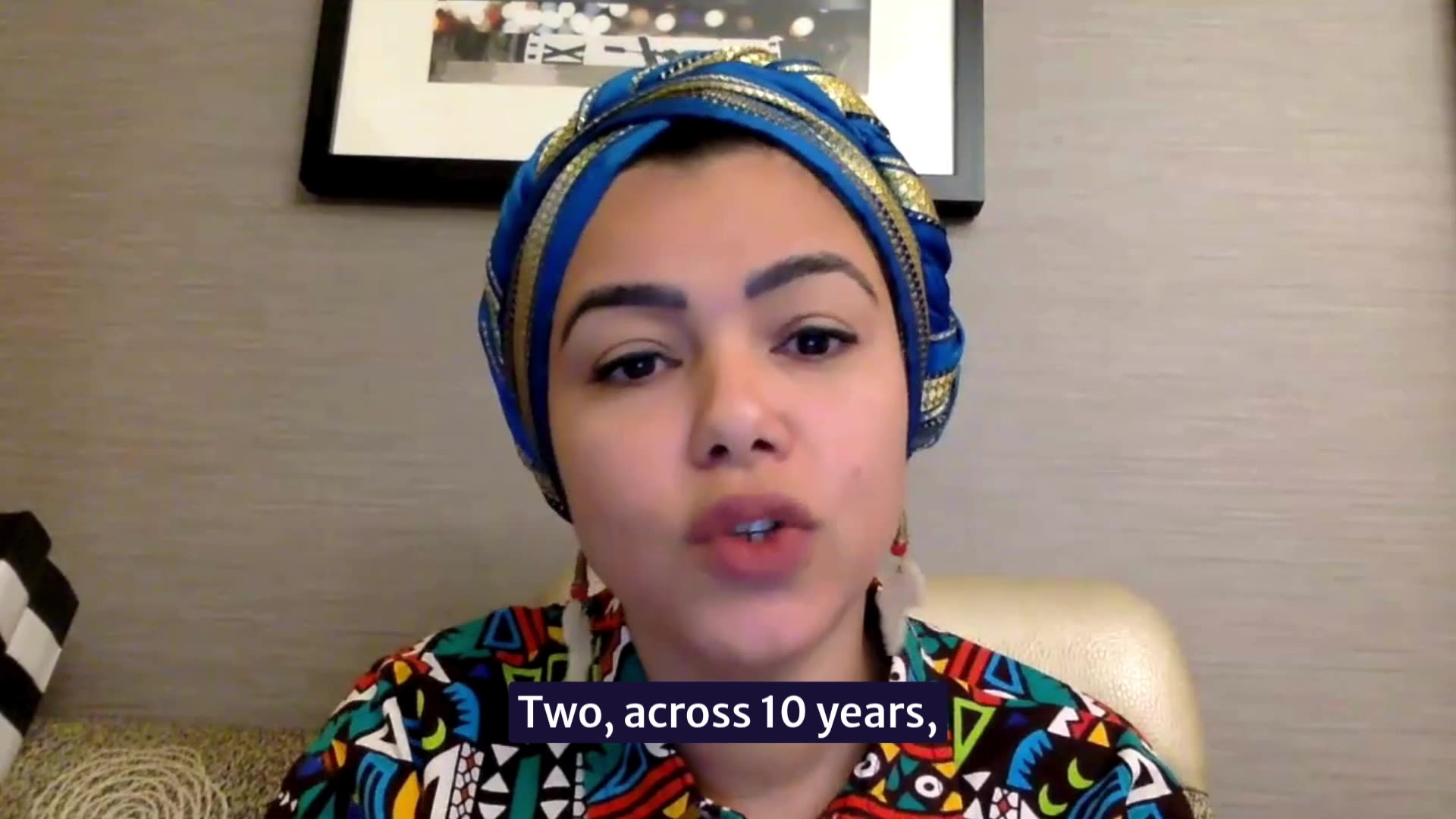
That argument goes to the center of the office, and the next Secretary-General will repeatedly face the same uncomfortable question: When does diplomatic language create room for action, and when does it become a cover for inaction?
For readers who want to go deeper before going further, Decoded 3: The Trade-Offs is the place to start.
It unpacks the tension between speaking publicly and preserving access, between moral clarity and diplomatic usefulness, between voice and influence. Decoded 4: The Vision shows why those choices must be made before risks become irreversible.
1. The Role
What the UN Secretary-General actually does and why the role is often misunderstood.
2. The Selection
How the UN Secretary-General is chosen, and why the selection process might feel so opaque.
3. The Trade-Offs
How leadership operates inside the UN and why it doesn’t work like your government.
4. The Vision
Moments when the UN Secretary-General shaped the world and what the next tipping point could be.
Voice, restraint, consequence
In Dialogue 3, Corinne Momal-Vanian, Executive Director of the Kofi Annan Foundation, reminded participants that "your moral compass and your affirmation of the UN Charter and its values always have to go hand-in-hand with action."
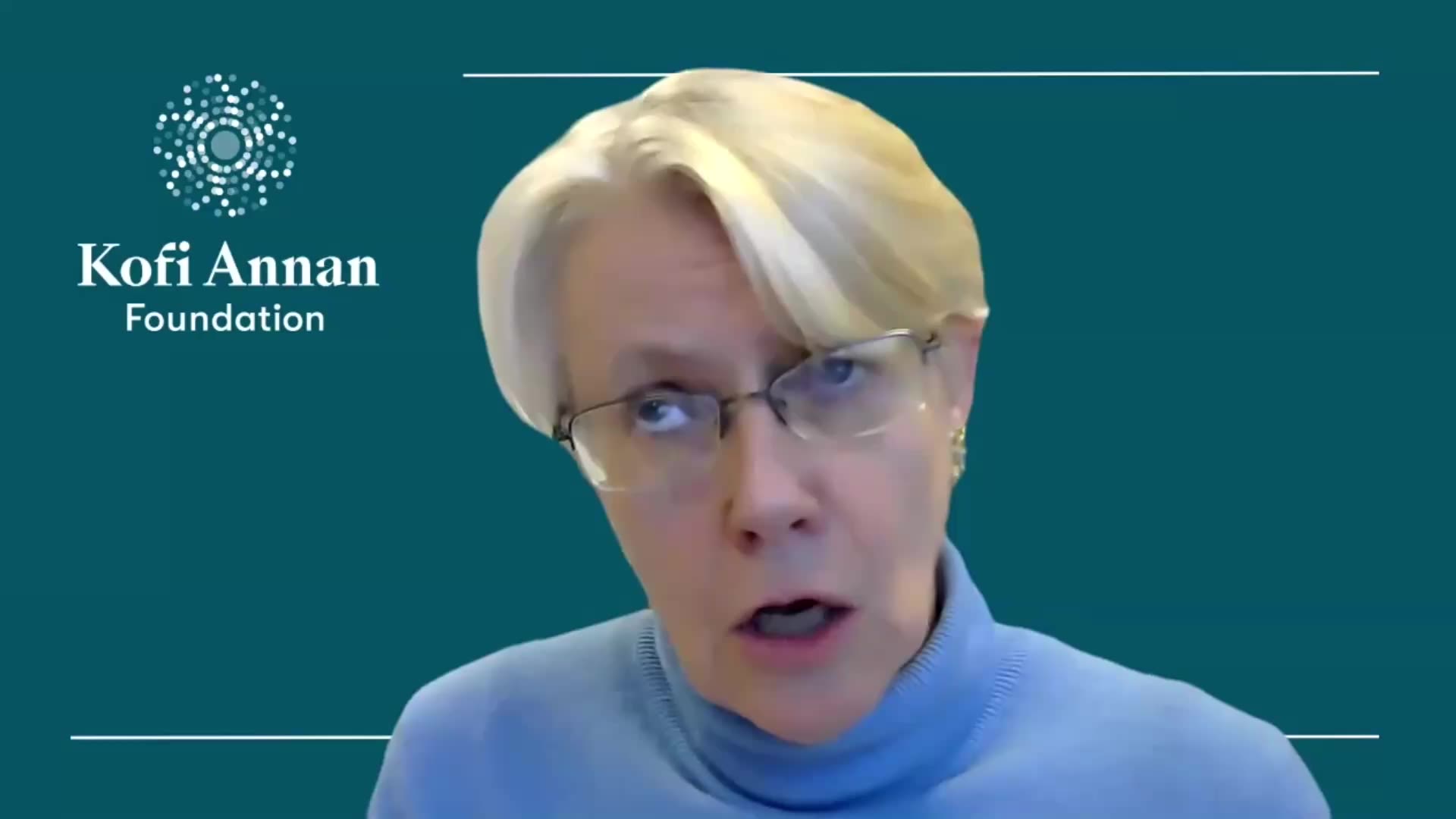
That is the essential balance. Moral clarity without action becomes performance. Action without values becomes technique. The youth-written Job Description makes the same point in more practical terms. The office is most credible when it can combine these things rather than choose one at the expense of the others.
History shows us that this is possible. When Kofi Annan said the Iraq war was not in accordance with the UN Charter, he clarified what the Charter meant at a moment when silence would have weakened confidence in the Secretary-General. During the 2007–2008 global food crisis, Ban Ki-moon focused on coordinating international responses to prevent market panic and humanitarian collapse In both cases, legitimacy came from the link between words and action.
Restraint in both these things is an essential quality, as International Crisis Group Program Director Richard Gowan cautioned in Dialogue 3 stating:
“You need to have a functional relationship with each of the veto powers.”
A Secretary-General who loses every major channel may keep their personal stance but risk undermining the usefulness of their position. The reality of the office whether it likes it or not – is that it works through countries, especially powerful ones. It must preserve relationships even when those relationships are difficult, uneven, and politically costly.
Consequence is the Measure
That is what makes timing so important. As Decoded 4 outlines, the hardest questions are rarely binary ones.
When does quiet diplomacy protect lives, and when does it merely protect power? When does public pressure create the political space for action, and when does it close the only available route to a deal?
A Secretary-General is not judged only by what they say, what relationships they preserve, or what channels of communication they keep open, but also by whether those choices help move the world closer to action.
86% of respondents to our survey say the office is constrained, too cautious, or both. They also show an understanding that, while structural limits exist on the Secretary-General’s power, the office may be underusing the power it does have. They repeatedly suggest that the next Secretary-General should act earlier, explain choices more clearly, and put their influence to use to create visible results.
The current moment makes this harder because confidence in shared norms is under strain. Member States bring different political traditions and priorities to conversations about rights, sovereignty, civic space, and accountability; and those differences can make collective action harder to sustain. Where the application of principles from the UN Charter or international law is seen as uneven, confidence in the system weakens further.
The next Secretary-General will therefore inherit not only mounting risks, but also the burden of rebuilding confidence that shared rules still matter and still carry weight.
86%
say the office is constrained, too cautious
Making choices transparent
While the office does not need to please everyone, it does need to make its choices transparent: what was said, why it was said, what was attempted, what failed, what changed, and who was protected. Some degree of opacity will always remain –diplomacy is not public theater. But a closed UN cannot ask people to trust it while offering no account of how it is using its authority.
Dialogue 4 put this challenge succinctly, with CFR Research Fellow Tony Oweke arguing that the Secretary-General’s role on AI is “not as a regulator” but as someone with the authority to bring the relevant parties together.
The office will increasingly be judged not only by how it responds to today’s crises, but also by who gets to shape the systems that govern tomorrow’s risks. Used carefully, the Secretary-General’s voice can still create pressure and preserve the possibility that power must be answerable to something beyond itself.
That is why credibility is more than a side issue for the Secretary-General. It is what allows the office to speak, to show restraint , and to act decisively when the moment requires it.
Disclaimer: The artworks displayed on this page were generated by artificial intelligence (AI) technology. They are not attributed to any real artist.
 Built with Shorthand